Leading Edge – Volume 41 – Difficult People: Responding

Going from Knowing to Doing

Success Requires Moving from Learning Into Change and Action

“What saves a man is to take a step. Then another step. It is always the same step, but you have to take it.”  Antoine De Saint-Exupery.


  • Positive Emotional Composition Enhances Physical Energy
  • Focus on Energy Management
  • Identify your Internal Motivators
  • Create Habits
  • Use an Accountability Team: Peers, Mentors, Family and Friends

By Teresa Lowry

I am fascinated by the process that takes us from knowing what we need to do to be successful to actually doing it. Nike encourages us to “Just Do It”. Life experience tells us it is not always that easy. We know the actions we need to take to be better leaders, better humans but how do we get from knowing to doing?

At Aegis Learning we are committed to creating a way forward for you. Successful leaders have energy and stamina. Leadership Impact teaches you to cultivate a positive emotional composition which results in increased physical energy. With more energy, we can maintain the habits created to meet our goals. To stay the course, we have peer coaches and mentors to hold us accountable. We can remain committed to positive habits by understanding our internal and external motivators.

GET YOUR EQ IN THE GAME

Emotional intelligence (EQ) is critical to successful leadership. Emotions drive attitudes and beliefs. Attitudes and beliefs drive behavior. 80% of our reactions, responses and decisions are driven by our emotions. Emotions have an impact (positive or negative) on our physical energy. By managing your emotions, you can consciously choose to operate in a zone of optimism and enthusiasm. Improved emotional health allows for increased energy to accomplish our goals.

At a recent company retreat several team members expressed a desire for more time to accomplish various goals. Highly accomplished and very productive professionals, these are the same people who the busier they are the more they accomplish. This started me thinking about whether the answer to what we need is more time or do we really need more energy?

In their book “The Power of Full Engagement” Jim Loehr and Tony Schwartz conclude that energy not time is the fundamental currency of high performance. Their study reveals that performance, health and happiness are grounded in the skillful management of energy. In addition to monitoring our emotional composition to support increased energy we require the creation of positive habits.

To jump start new habits you need motivation. Back to EQ and knowing yourself. Motivation is unique to the individual and the habits we will cultivate must resonate at our core. Organizational theorists Thomas Malone and Mark Lepper have identified several sources of intrinsic motivation: Challenge, Curiosity, Control, Fantasy, Cooperation, Competition, and Recognition. Determine which motivators resonate with you. These intrinsic motivators become key to the creation of new habits.

HABIT IS WHAT KEEPS YOU GOING

Jim Rohn said it best “Motivation is what gets you started. Habit is what keeps you going.” Set up your surroundings to support your goals and habits. In “The Power of Habit” business reporter Charles Duhigg found the key to exercising regularly, losing weight, being more productive and achieving success is understanding how habits work.

For me, exercising seven days a week, at the same time every day lead to making it a habit. There is no decision to be made on whether today is the day or telling myself I can do it tomorrow. I removed the decision-making piece from the equation. Set up your surroundings to support your goals and habits. Changing into my exercise “uniform” first thing in the morning helps reinforce the habit. Cultivate habits that align with your intrinsic motivators. Next, establish your accountability team.

CHOOSE YOUR ACCOUNTABILITY TEAM

J.E. is my Shero. She works the graveyard shift as a nursing supervisor in Labor and Delivery at a local hospital. Married, with four active teenagers at home, J.E. finds the time and energy to attend an 8am Bootcamp workout at my gym. Committed to her health and fitness, this also qualifies as her “me time”. J.E. has a strategy to hold herself accountable. She pays her trainer or work out partner $40 if she does not show up. Her husband has similar habits and shared goals and together they compete in obstacle course races. J.E. knows the power of having friends and family hold her accountable.

Even if we put our workout, meditation, self-improvement related activities on our to do list or calendar many of us are far too willing to break a commitment to ourselves. If we have a friend or partner that we are accountable to we are more likely to not want to disappoint them so we show up. Most people are far more likely to maintain a new habit if they are accountable to a partner, coach or team. Personally, I am intrinsically motivated by a team environment. The thought of running a Spartan Race by myself sends my mind into excuse mode. If I am with a team, the commitment to others ensures I will be there to perform at my highest level.

At the office, choose a colleague, peer coach or mentor to help hold you accountable. Schedule regular meetings. By determining when, where and how it will be done your success rate will be substantially higher.

AEGIS LEARNING THE PATH FORWARD

Aegis Learning provides the tools needed to keep learning alive. The Aegis PATH is a series of emails delivered to you after you have completed a program. Each email will have Five Keys to continue to work on and remember to create the best application of skills possible. There is a self-assessment tool option with each email for you to assess where you are and create an action plan for where you want to be. Your supervisor, mentor or program sponsor will also be receiving a set of emails with discussion points and specifics of follow up. This feature will keep the learning and culture changing competencies in your organization alive.

It is up to you to connect the learning to action by understanding your motivations and creating habits that support successful leadership competencies. Let your accountability team support you. Continue to reassess and evaluate your progress and you will go from knowing to doing.


Teresa Lowry is a passionate advocate for learning, growth and generating real organizational change.
Fueling that passion are exceptional communication abilities, a great training room presence and the ability to connect with people successfully in mentoring and coaching. Personally, Teresa enjoys serving on several community boards, volunteering with non-profit community groups and, along with her husband, you will find her in the gym every morning working out and training for distance and obstacle races.

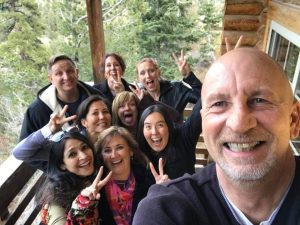
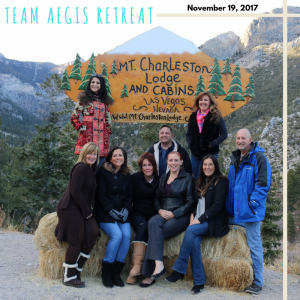
Aegis Learning Team Retreat 2017

Planning to Provide You with Better Quality and Value

The Mount Charleston Lodge was the site of the 2017 Aegis Learning team retreat.

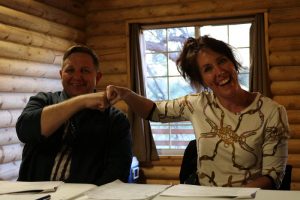
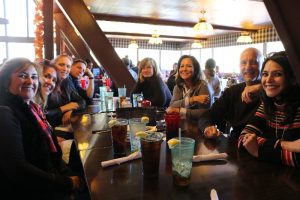
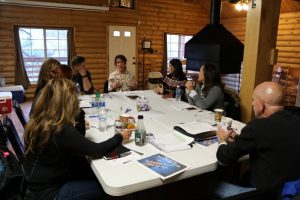
To the casual observer, the amount of laughter may indicate that it was nothing but fun and spirited interaction among team members who are also friends.  But the roaring of laughter was just a sign that real work was happening with a team that enjoys each others company immensely.

Using information we gathered from our external customer survey and our internal GAP/SWOT analysis, we have crafted a course for 2018 that will continue to add value and impact to our customers.  Look for 2018 to bring a set of beautifully designed online learning programs, regular webinars, podcasts and great diversity in our newsletter articles.  

Much more than just the technical planning, you will also benefit from many voices, diverse perspectives and incredible and different talents all focused in one direction and with singular, passionate purpose.  We are devoted to your success, to make better people and workplaces and to make a positive impact on the world in which we live.  

Did we mention we laughed a lot too.

Aegis CARES Update-November, 2017 Las Vegas Rescue Mission and Opportunity Village

Helping to Make Our Community and World a Better Place

Aegis Cares was able to complete two projects this week with impact on our community.

A donation to the Las Vegas Rescue Mission with matching donations from Aegis Learning was delivered that will assist in feeding the homeless population during the holiday season.  The Las Vegas Rescue Mission serves both resident and non-resident homeless and poverty level near-homeless people in the Las Vegas valley by providing basic needs and long-term assistance in substance abuse recovery and life skills.

For the third consecutive year, the team at Aegis Learning is also supporting Opportunity Village by creating a tree for their Magical Forest event.  Opportunity Village consistently is rated the most admired charitable support organization in Las Vegas and provides job and life services to developmentally disadvantaged people.  

Thank you to all the Aegis Cares volunteers and supporters and a big thank you to Polly Walker from Aegis Learning for coordinating these giving events.  

#powerof1

#risetopurpose

Aegis Learning Cares

Join our Facebook group to receive updates and to participate in Aegis Cares campaigns and events.

Leading Edge – Volume 39 – Difficult People: Apologies

Dealing with Difficult People-Apologies

A sincere apology offered to a difficult person can go a long way in helping ease the situation and win them over. At a minimum we need to apologize for what they are feeling and an apology is not an admission of wrongdoing.

  • Offering an apology does not imply wrongdoing or error
  • An apology is a powerful statement of empathy
  • At a minimum, offer an apology for the emotion of the difficult person
  • Own the situation by using first person pronouns
  • Remember, this is not about you but about diffusing the difficult person

Leading Edge – Volume 38 – Difficult People: Empathy

Dealing with Difficult People-Empathy

Genuine and sincere empathy, either situational or emotional, will go a great way to diffuse a difficult person. Always listen for queues in which you can provide empathy and never compare to any situation you have experienced. Also add the use of the person’s name during this step.

  • After Listening, We Must Apply Empathy and Understanding to Difficult People
  • Empathy is Relating to People Either Situationally or Emotionally
  • Situational Empathy is You Have Experienced the Same Thing
  • Emotional Empathy is You Have Experienced the Emotion

And never, ever, use comparative empathy when you directly compare someone’s experience to yours. A real empathy killer.

Owning Our Decisions

At the end of the day, the decision was yours. Even with collaboration and using systems thinking, you made the call. The decision is part of your leadership record and legacy.

Effective leaders cannot run from their decisions. They cannot blame others. They cannot blame the economy. They cannot hedge or try to escape accountability. It was your decision.

When right on target a decision is a glorious thing. Your hard work paid off and you chose the correct course of action. Everything fell into place nicely and the return was better than anticipated. It is pretty easy to own that type of decision.

The harder decisions to own are the clunkers. The ones that don’t work out so well or the choice that just did not pan out. Those are hard to swallow and to have your name attached.

Effective leaders own decisions that are both good and bad. With good decisions, the leader will share credit with the team, those that provided valuable input and any stakeholder that gave clues about outcomes or consequences.

When the decision is a poor choice you are on your own buddy. Can’t blame the data or any person. It is all you.

With bad decisions, there are a couple of additional decision points that come into play. The poorest choice is to defend and continue to cheerlead for a bad decision. This is simply digging a bigger hole and drawing more attention and potentially, criticism to a bad decision.

The effective leader must admit the mistake and work diligently to fix it. Simply say that you made a mistake, you are sorry and you will get it fixed. Use plenty of personal pronouns to make sure the ownership of the decision is clear. You may not get beaten up for a bad decision but you will certainly loose credibility if you try to run from it.

When looking at a poor decision, first check and see if you gave yourself enough time to analyze and diagnose the situation and all of the potential impacts. This is the most common reason for poor decisions. Then, retrace the system thinking and seek a different and wider scope of input that focuses on why the first decision failed and that the issue still exists. Never compound a poor decision with a rash or arbitrary fix that is simply designed to save face.

Tim Schneider is the founder of Aegis Learning and has been working with teams and leaders for 25 years.   He generates results, impact and his sole focus is your success.
He is the author of The Ten Competencies of Outstanding Leadership and Beyond Engagement and a widely sought speaker, training facilitator and individual development coach.

What’s New at Aegis Learning – Exciting New Tools and Programs!

Aegis Learning Edge is in Impact, Value and Results

Debut of Q3 and The Path from Aegis Learning

Aegis Learning never stops innovating.  And innovating for you and your growth and we are excited to offer two new tools for your learning and growth.

Q3 is the groundbreaking combination of three pieces of intelligence that neuroscientists and behaviorists indicate have a greater impact on success than traditionally measured IQ.  Q3 combines learning and growth in emotional intelligence, relational intelligence and situational intelligence to provide an incredible growth in personal and professional success factors.  This highly validated set of skills is powerful for leaders, sales professionals, customer service providers and entrepreneurs.   Learn more by clicking the image below.

Aegis Path is a unique set of programmed follow-up tools that will automatically sent to all of our program participants.  This reminder and challenge is accompanied with a self-assessment to measure continued progress and help our participants continue to map out their success in action plan form.  But one of the best parts of Aegis Path is an independent set of tools sent to participant’s sponsors/mentors/leaders that assist them in keeping the learning and culture changing competencies living in their organization.  It maps out discussion points and follow-up with participants to ensure that the return on training investment is long-lived.

Emotional Intelligence, Situational Awareness and Relationships

Leading Edge – Volume 37 – Difficult People: Listening

Dealing with Difficult People-Listening

The first, and most important step, in dealing with difficult people is to listen to them. Complete and uninterrupted listening is needed to remove the emotionalism and allow you the space to provide solutions later. Creating boundaries is also needed to keep the interactions civil and acceptable.

  • Listening is a Critical Element of Dealing with Difficult People
  • Listening Must be Focused and Uninterrupted
  • Avoid Jumping In to Fix
  • Keep Boundaries and Don’t Accept Abuse in Listening
  • Sometimes Listening is All That is Required